
ADP / Protective detail with vehicle support / Directional posture
ADP
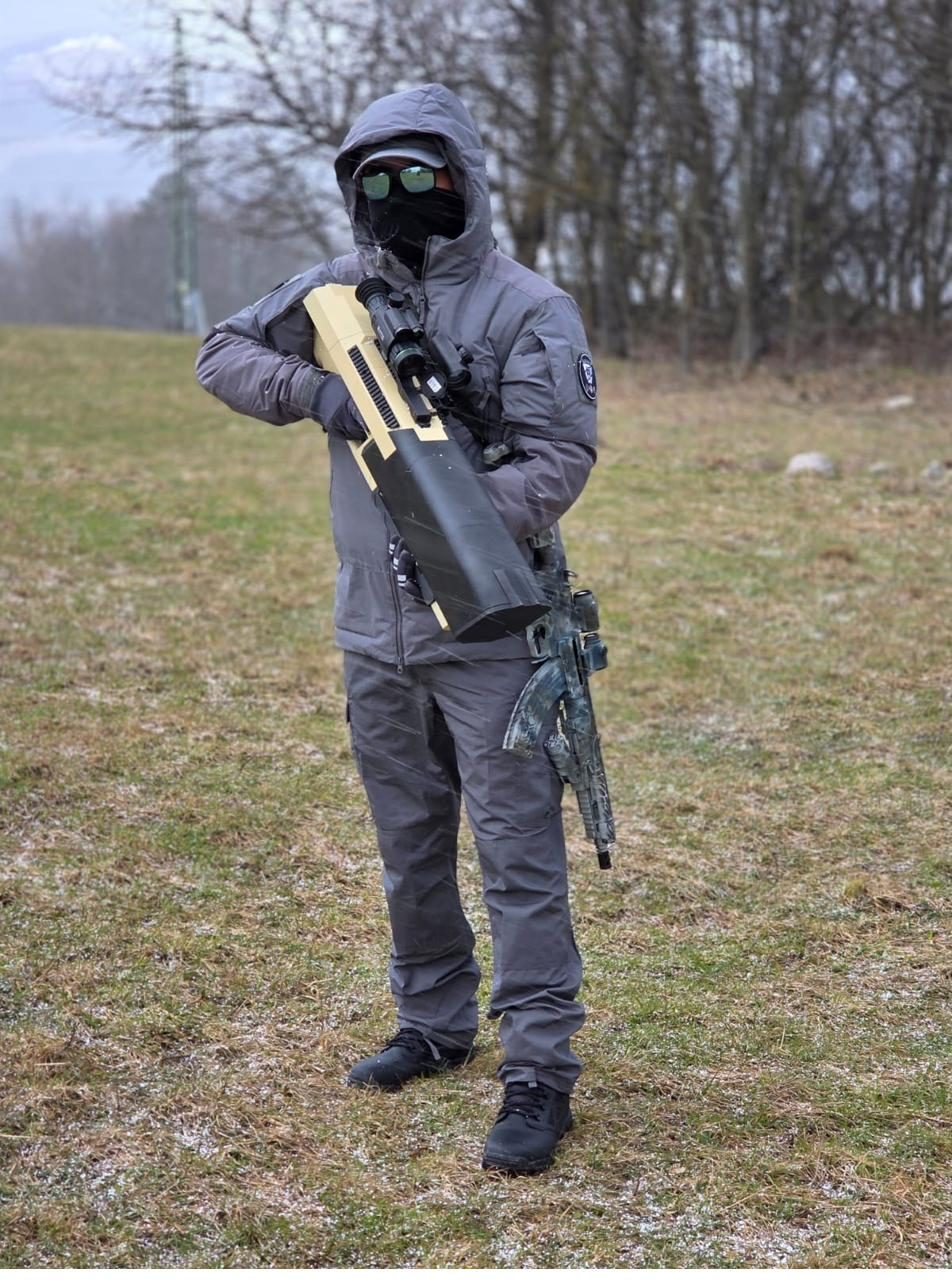
Anti-drone rifle
It is no longer a question of whether a hostile drone will be used against a high-value target or facility. It is a question of when — and of what the protection team is holding when it happens.
jamming range
& UAV detection
extendable to 12 GHz
IP64
Above small arms.
Below air defence.
Issued small arms are not a serious answer to something holding at 300 metres. Air defence does not switch on for a two-kilogram quadcopter above a city square. Between the two sits a band — roughly 50 to 400 metres — where a commercially available aircraft can loiter, observe and carry, and where the team on the ground has usually had nothing to reach with.
ADP is built for that band, and for that team. It is carried by the people who are already there, applies its effect inside the sector the operator is pointing at, and works without anything leaving a barrel — which is what makes it usable over a public square, along a motorcade route, or on a perimeter with people behind it.
One system, two effects.
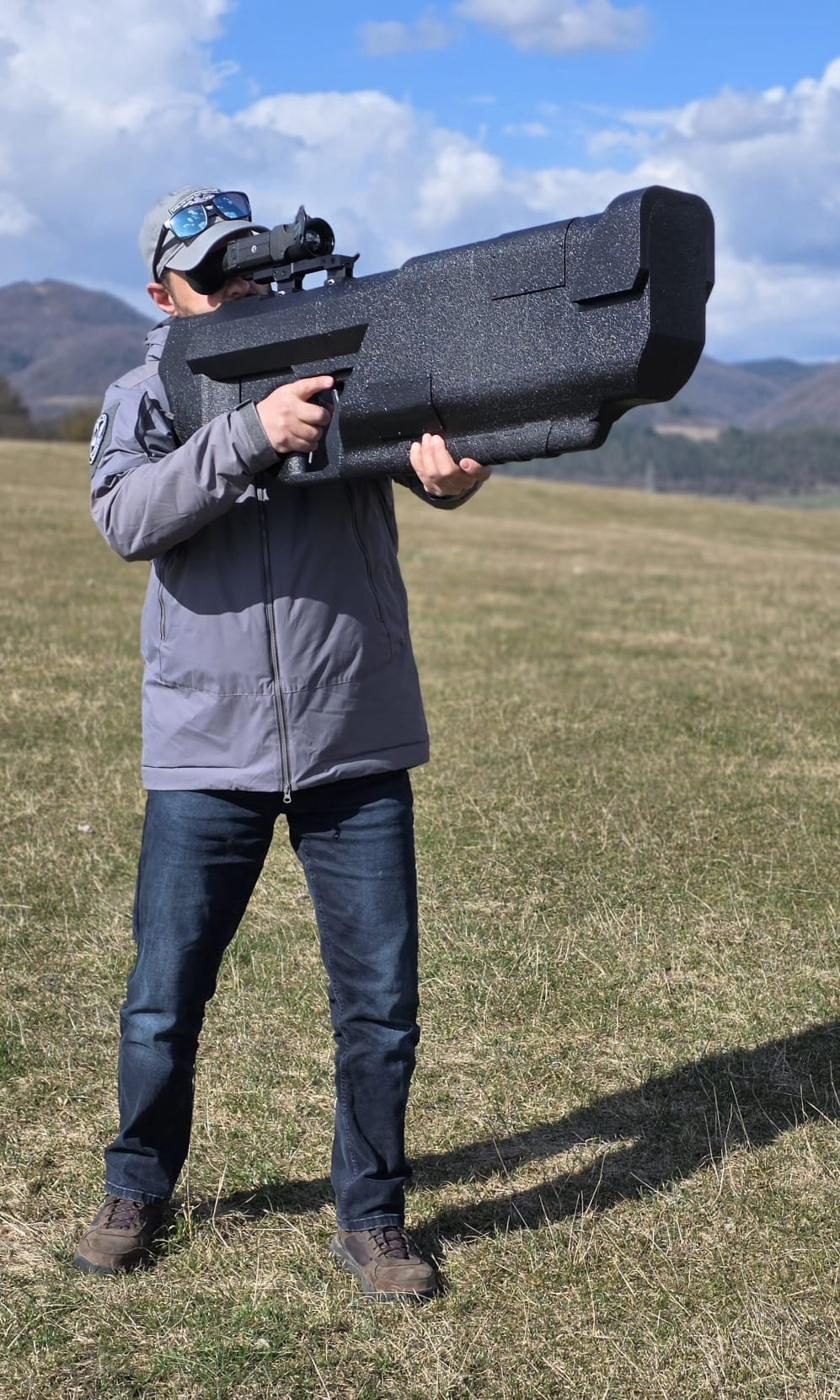
Held horizontally, ADP applies a directional effect out to 4 km inside the sector the operator is pointing at. Rotated to vertical, the same system becomes a spatial jammer covering 1.5 km around the position — a protective bubble over a moving principal or a static perimeter. Switching between the two is a change of posture, not a change of kit.
Targeting is through digital infra-thermal vision or a collimator, and the system warns of a UAV in the area by vibration, tone and an indication in the optic before the operator has seen anything.
Shared warning across the detail.
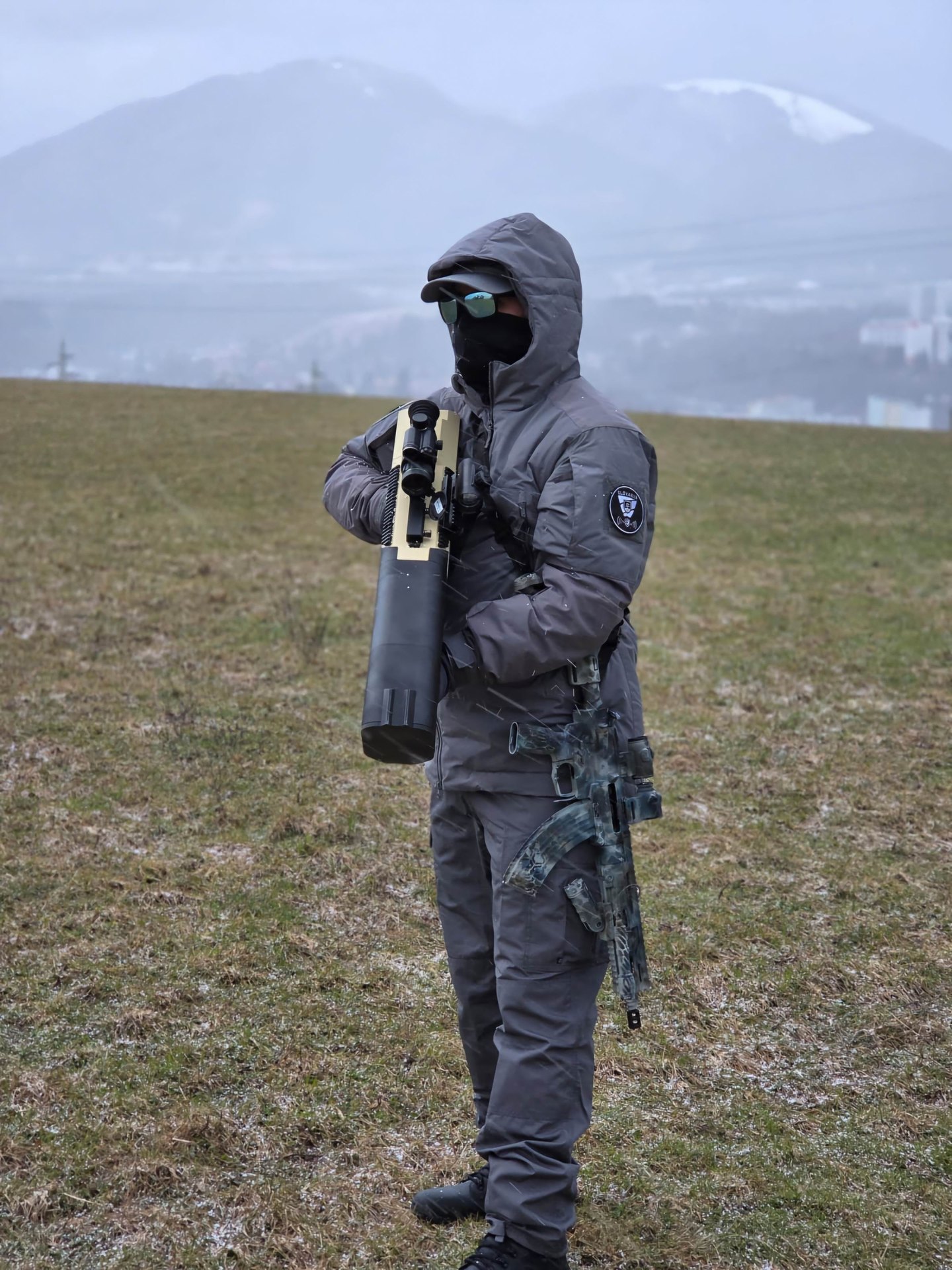
Several ADP systems form an ad-hoc link and share threat warnings, so a dismounted team works from one consolidated picture rather than from four independent alerts. Any system in the link can determine the GPS position of an observed object and pass that position to the rest of the network.
Under a C2 Defender, ADP becomes the dismounted end of the same sensor chain — cued by radar, RF and acoustic detection instead of by eyesight.
ADP specification
| Power supply | 28 V DC |
|---|---|
| Power source | interchangeable battery |
| Standby mode on charge | 10 h |
| Operating temperature | −30 / +70 °C |
| Weight | 6 – 8 kg |
| Ingress protection | IP64 |
| Directional jamming range | 400 – 6000 MHz |
| Effective directional range | 0 – 4 km |
| Spatial jamming range | 400 – 6000 MHz |
| Effective spatial range | 1.5 km |
| Extended frequency range | 20 – 12 000 MHz |
| Jamming method | entire range at once |
| Antenna switching speed | 6 s |
| Signal ramp-up speed | 3.5 s |
| Directional / spatial switch | rotate to vertical |
| UAV detection range | 1.5 km |
| Warning indication | vibration · sound · optic |
| Targeting | infra-thermal / collimator |
Capabilities
- Determines the GPS position of the observed object
- Hands that position to the command element and connected systems
- Ad-hoc link between multiple systems with shared threat warnings
- Adjustable frequency range on request
- Defeats frequency-hopping control signals
- Available in a simplified configuration without supporting subsystems
- Effective against remote-controlled devices, explosives and communications equipment, not only UAVs
Deployment
- Protected persons in transit and at their residences
- Government buildings, ministries and embassies
- Facilities of special importance and strategic infrastructure
- Public events and secured perimeters
- Field units operating under the C2 Defender vehicle
REB Defence systems may be subject to Slovak and European Union export-control law, including Regulation (EU) 2021/821 on dual-use items. Radio-frequency effect systems are supplied to authorised government, defence and law-enforcement end users only, and their employment remains subject to national spectrum authority, rules of engagement and applicable law.
Where it plugs in.
- Ad-hoc mesh between ADP systems, sharing detections and warnings
- Acoustic cueing from AcuSync nodes carried by the same team
- Target hand-off from C2 Defender radar and RF detection
- GPS position hand-off into the C2 Defender picture
ADP in the field.
Layers that reinforce each other.
ADP is complete on its own. Alongside the others it is stronger — each system covers a blind spot the rest cannot reach, and every one of them acts on what the others detect.
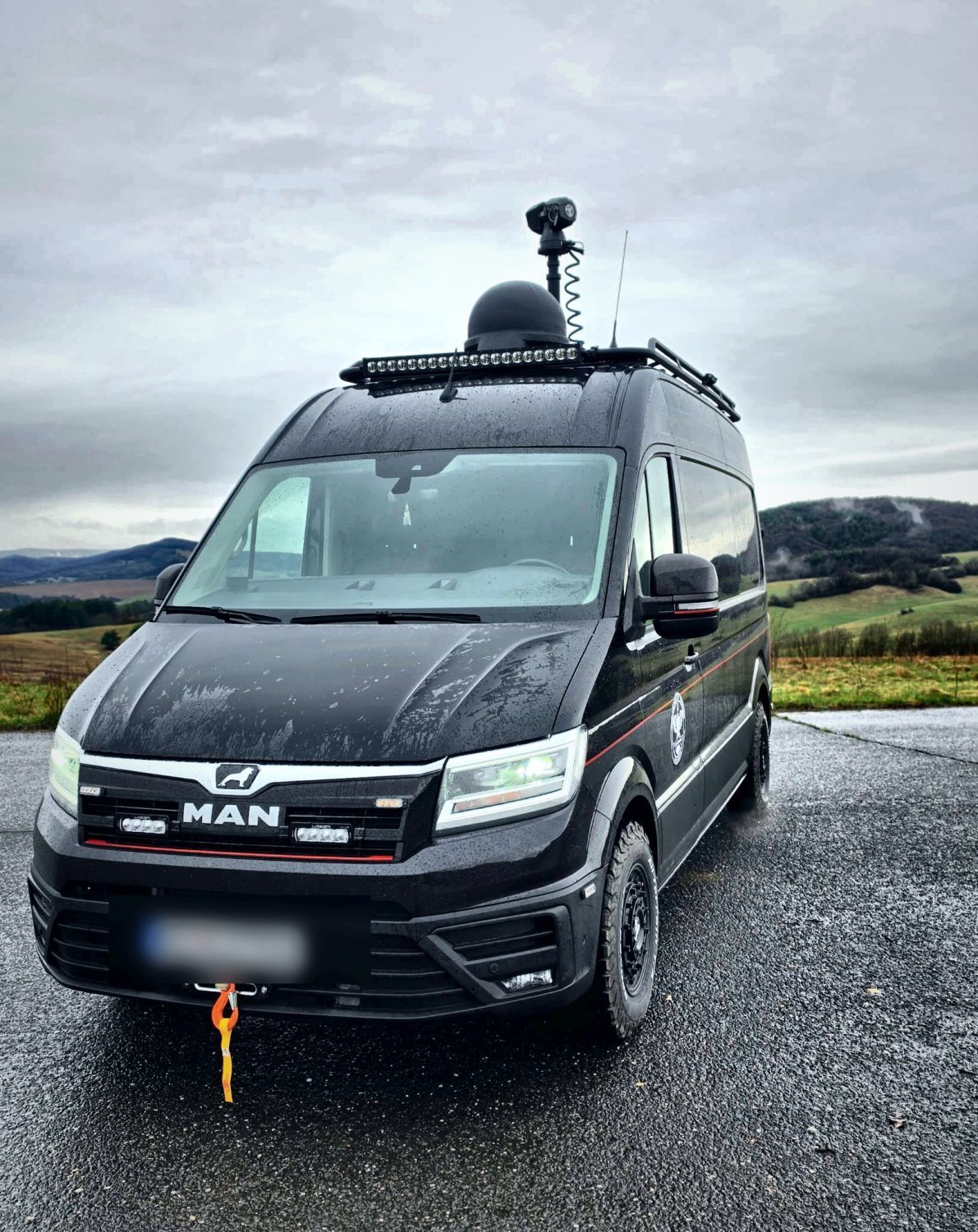
C2 Defender
Mobile command post and multi-domain fusion node. Radar, RF, electro-optics, acoustics and UAV feeds converge into one picture.
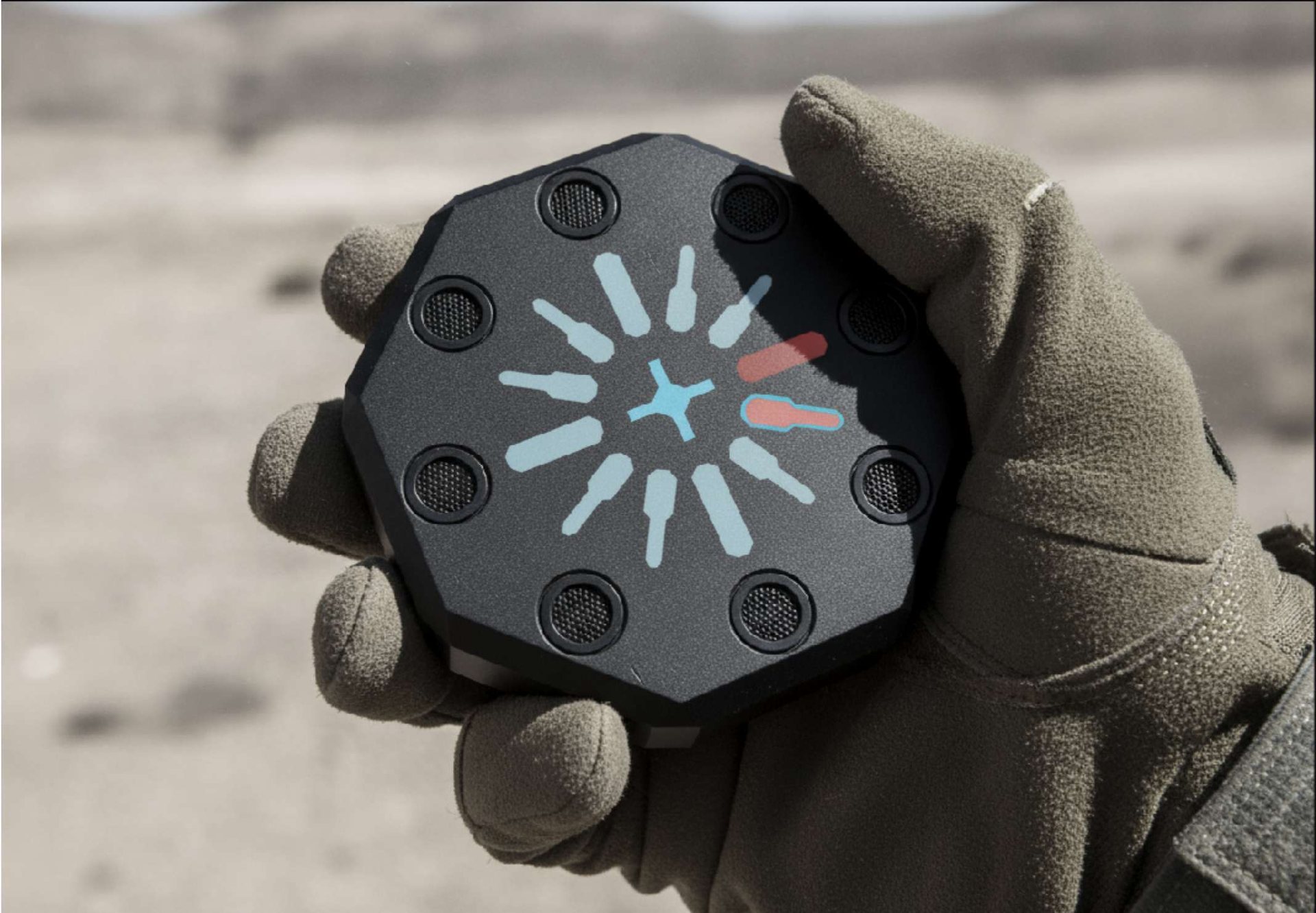
AcuSync
Hears UAS and small-arms fire on eight microphones, names the threat and points at it — without transmitting a detection signal of its own.
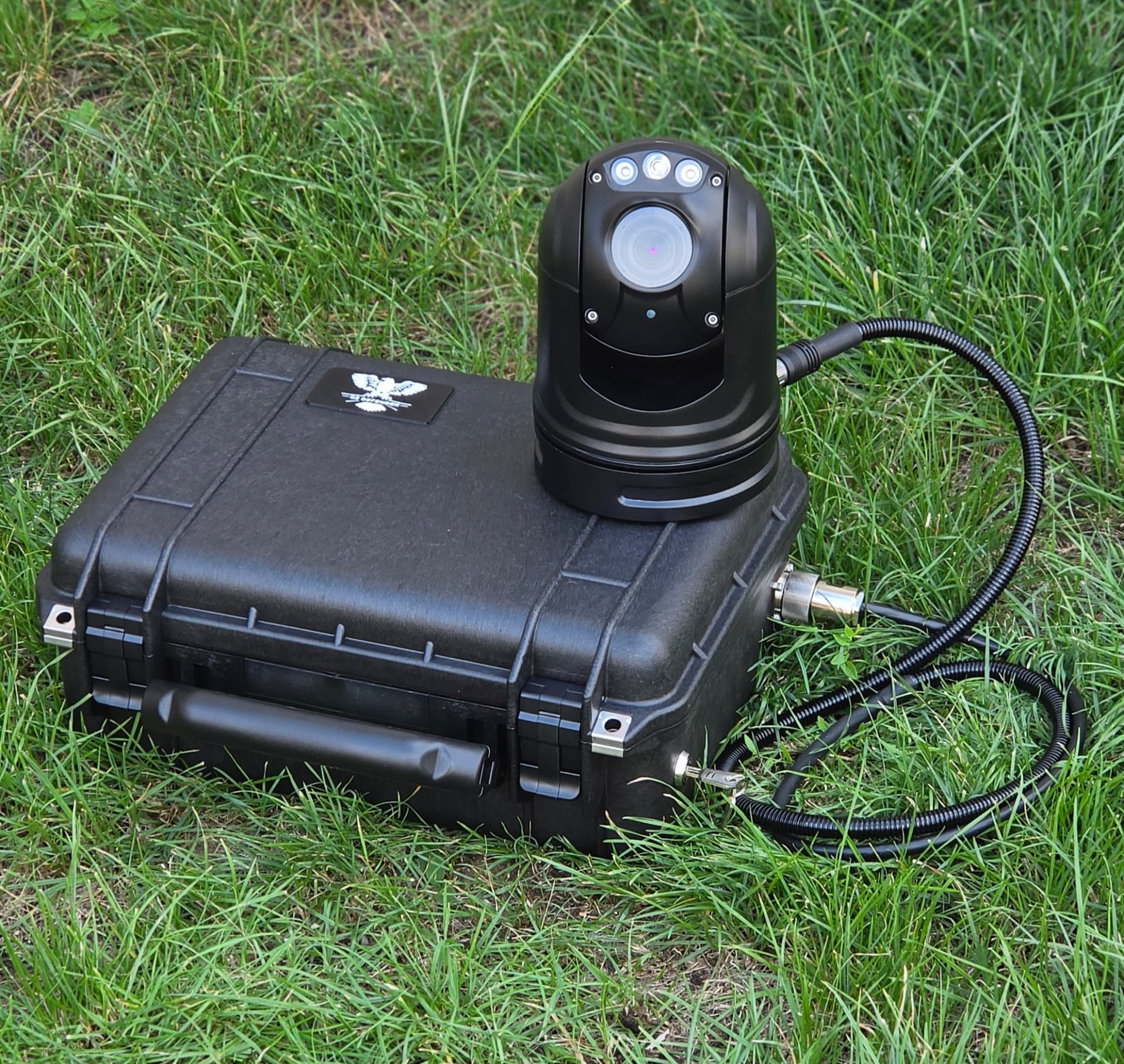
C2 Minions
Four rugged pan-tilt-zoom cameras in transport cases. Live feed straight to C2 Defender, no operator at the position.
Tell us what you have to protect.
Give us the area of operations, the threat picture, the units taking part and the authority you hold. We will come back with a system architecture and a realistic timeline — not a catalogue.